


 info@qjmed.com



Whether Third-Party Harmonic Ligasure Instruments Are Plug-and-Play with Energy Generators
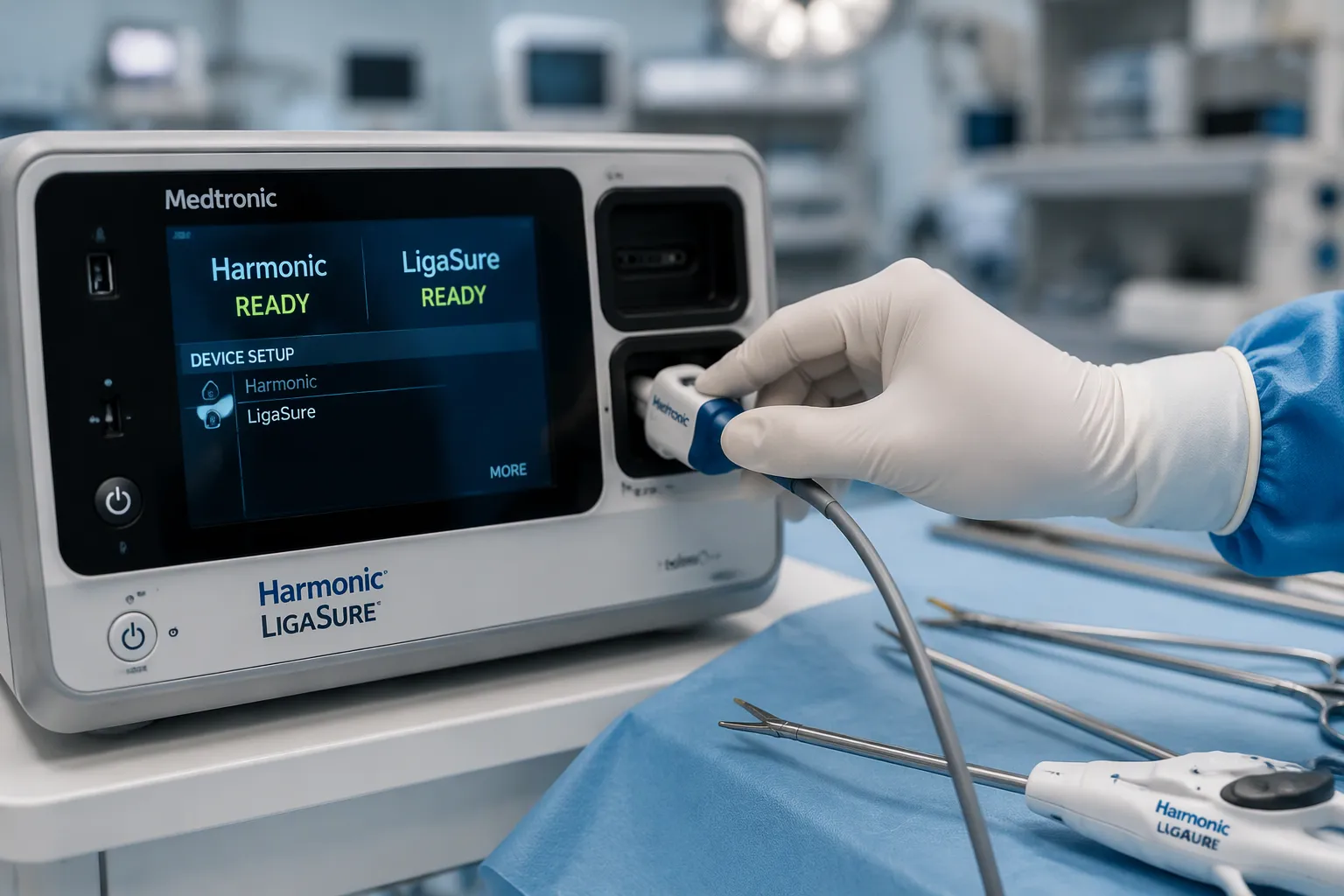
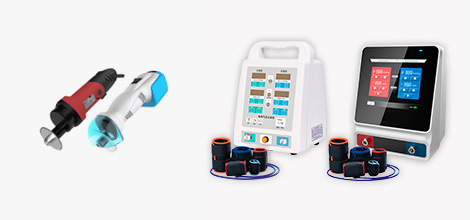
Third-party harmonic ligasure instruments usually do not work right away with OEM energy generators. Three main reasons explain this: special connectors, generator software handshakes, and calibration. One detail matters here. Harmonic instruments use ultrasonic energy, while LigaSure devices use bipolar energy. Some LigaSure handpieces can work with most generators if you buy an adapter, so "it depends" is part of the honest answer.
These stakes affect different roles. OR nurses care about handle compatibility and easy setup. Engineers and procurement managers care about verification, risk, and cost. You will not find a simple yes or no here. This post ends with a practical decision guide instead.
Key Takeaways
Third-party instruments often do not work right away with OEM generators. This is because of special connectors and software.
Before you buy, always make sure your exact generator model and instrument model work together.
Try any new pairing with a small pilot test before using it on patients. This helps ensure safety and performance.
Using a matched system from one vendor makes setup, training, and warranty support easier.
Compare the full cost of third-party options, like testing time and risk, with the lower upfront price.
Why Harmonic Ligasure Instruments Resist Plug-and-Play
Proprietary Connectors and Physical Fit
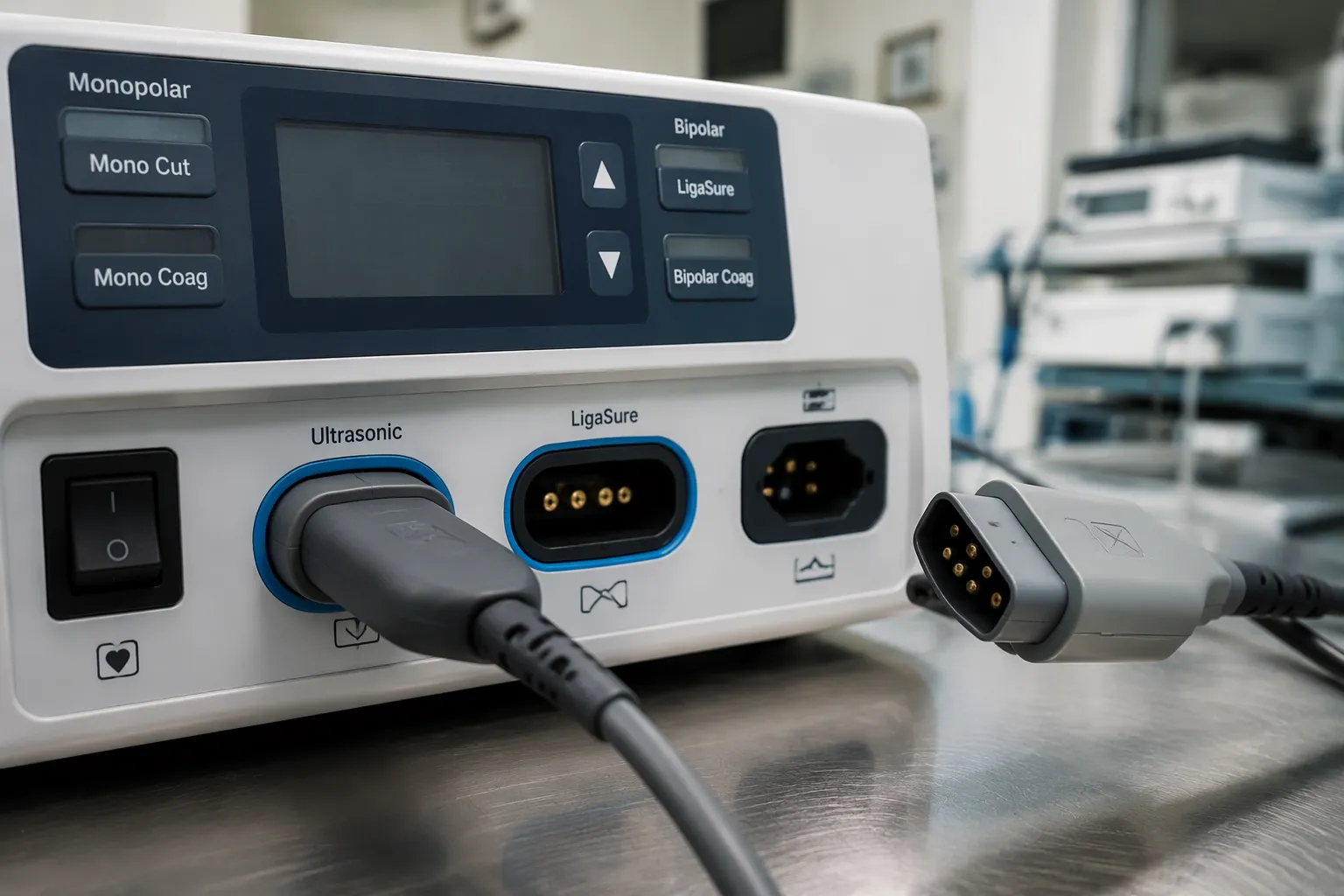
Begin with the energy type. Harmonic instruments use ultrasonic mechanical energy. A handpiece shakes at high frequency and cuts tissue through friction. LigaSure devices use bipolar energy. They send current through tissue while jaws press down. Many LigaSure generators also sense tissue impedance and adjust output in real time. These two types need different generator outputs, different cables, and different control logic. You cannot pair an ultrasonic handpiece with a bipolar generator, and the reverse fails too. Energy type comes first in any compatibility check.
Physical fit adds a second barrier. Each manufacturer designs its own plug, keyway, and cable pinout. A third-party plug may look similar to the OEM plug. The internal contacts still differ in position and signal assignment. The generator reads those signals to identify the attached instrument. A mismatched plug either will not seat or will not report a valid instrument ID. Some LigaSure 5-mm blunt-tip instruments can run on most generators through a purchased adapter. Treat that adapter as a specific exception, not a general rule. The adapter covers certain handpiece models and certain generator families. It does not turn every harmonic ligasure instrument into a universal device. Confirm the exact model pairing before you plan a case around it.
Software Handshakes and Calibration
Generators are not passive power supplies. They run firmware that identifies the instrument, checks its usage count, and sets an energy profile. The instrument and generator complete a handshake at connection. A valid handshake unlocks the correct power curve and activation limits. Third-party instruments may lack the identification chip or the expected signal pattern. The generator then refuses to activate or defaults to a safe mode.
Calibration is the third barrier. Sealing performance depends on the generator delivering a known energy dose for a known jaw pressure and tissue type. OEM instruments ship with calibration data matched to their generator. A third-party instrument carries its own calibration assumptions. Those assumptions may not match the generator's feedback loop. The result can be inconsistent seals, longer activation times, or early shutoff. None of these outcomes is certain. They are risks you must test, not assume away.
The practical lesson is simple. Compatibility is a system property, not a plug property. Check the generator model, the instrument model, and the adapter or interface between them. Ask the supplier for written compatibility documentation. Run a pilot before you commit a full case load. This approach protects your patients and your team.
Performance and Safety Implications
Seal Consistency and Energy Delivery
Seal quality depends on the generator and the instrument working as one unit. The generator checks tissue resistance and adjusts energy output during use. A third-party instrument may send back different feedback values than the generator expects. The generator then gives a dose that does not match the jaw design. You may see seals that hold on one case and fail on the next. That variation is the real safety concern, not one big failure.
Test seal strength before you trust a new pairing. Run a pilot on benchtop tissue models and compare burst pressure results against the OEM baseline. A matched system gives you a stated performance target to check against. For example, the Qianjing Medical Vessel Sealing and Cutting System pairs its instruments with a dedicated SM5000 generator and states burst pressure above 360 mmHg with thermal spread under 2 mm. Those numbers give your team a benchmark. Without a verified pairing, you have no benchmark at all.
Workflow Impact for OR Teams
Setup time shapes the whole room. A plug-and-play pairing lets the scrub nurse connect the handle and confirm the generator recognizes it in seconds. A mismatched pairing forces troubleshooting mid-setup. The generator may show an unrecognized instrument warning. The team then swaps handles, hunts for an adapter, or calls biomedical engineering. Each step delays the first incision.
Handle ergonomics matter just as much over a long case. Third-party handles vary in weight, grip angle, and trigger feel. Ask your surgeons to trial the handle in a dry lab before you standardize. Confirm the setup needs no manual tuning, because a generator that requires per-case adjustment adds a step your nurses must own. Finally, check supplier training and support. A supplier who trains your staff on the specific generator and instrument pairing protects your workflow long after the purchase order closes.
Regulatory, Warranty, and Compliance Risks
FDA Clearance and Intended-Use Pairing
Rules from the FDA tie each instrument to a specific use. In the United States, the FDA approves a device with labels that name the generator family and the energy type it supports. Those labels are part of the approval, not just a sales detail. If you pair a third-party instrument with a generator outside that labeled pairing, you step outside the approved setup. Your facility then has to prove the combination is safe and works.
Read the instructions for use before you approve any mixed pairing. Check that the document names your exact generator model and the energy type. A LigaSure handpiece approved for bipolar use does not become an ultrasonic device just because you add an adapter. Ask the supplier for a written statement of compatibility. Keep that statement in your file for surveys and audits. Your compliance team will want a clear paper trail that links each instrument to an approved generator.
Warranty and Service Coverage
Warranty terms often depend on how you use the equipment. Many generator warranties cover defects under normal use with approved accessories. A third-party instrument may fall outside that definition. If a generator fails during a mixed pairing, the manufacturer may question the claim. You then face a repair bill and downtime while the parties sort out who is responsible.
Map your service coverage before you buy. Confirm who repairs the generator, who replaces failed instruments, and who answers the phone during a case. Ask whether the supplier provides loaner units and technical support in your time zone. A matched ecosystem keeps one vendor accountable for the whole chain. That single point of contact makes warranty claims and staff training simpler, and it lowers the chance that a compatibility dispute stalls your OR schedule.
Cost Trade-Offs and Matched-System Alternatives
Total Cost of Ownership vs. Upfront Price
A low price on the tag rarely shows the whole cost. Add up the adapters you buy, the hours spent on pilot testing, the biomedical engineering time, and the risk of a delayed case. These costs stay hidden outside the purchase order. A cheaper third-party instrument can cost more for each procedure once you count the verification work it requires.
Track the full picture over a year of cases. Include the price of consumables, generator service, staff training, and the labor hours your team spends checking compatibility. A matched system usually has a higher upfront price. It often pays back that difference through faster setup and fewer surprises. Run the numbers for your own case volume before you decide.
Qianjing Medical Vessel Sealing and Cutting System
The Qianjing Medical Vessel Sealing and Cutting System gives you a matched generator and instrument ecosystem. Its dedicated SM5000 generator delivers bipolar coagulation up to 180W and bipolar cut up to 100W. The platform seals vessels up to 7 mm, states burst pressure above 360 mmHg, and limits thermal spread to under 2 mm. Low smoke and anti-stick jaws help keep the endoscopic field clear. The system holds CE marking and ISO 13485 certification.
Compatible instruments include SM handles, QEB 5 mm electrodes, and QF scissor electrodes. These cover both laparoscopic and open procedures. You get one vendor who is accountable for the generator, the instruments, and the training. That single pairing takes the adapter question off your setup checklist.
Position this system as a high-performance alternative to harmonic and LigaSure-type devices. It suits teams that want a verified pairing from a single vendor. It does not claim to be better than OEM options. Compare it against your current platform on seal performance, handle feel, and service terms. Let your pilot data guide the choice.
A Decision Guide for Procurement Teams
When Third-Party Instruments Fit Best
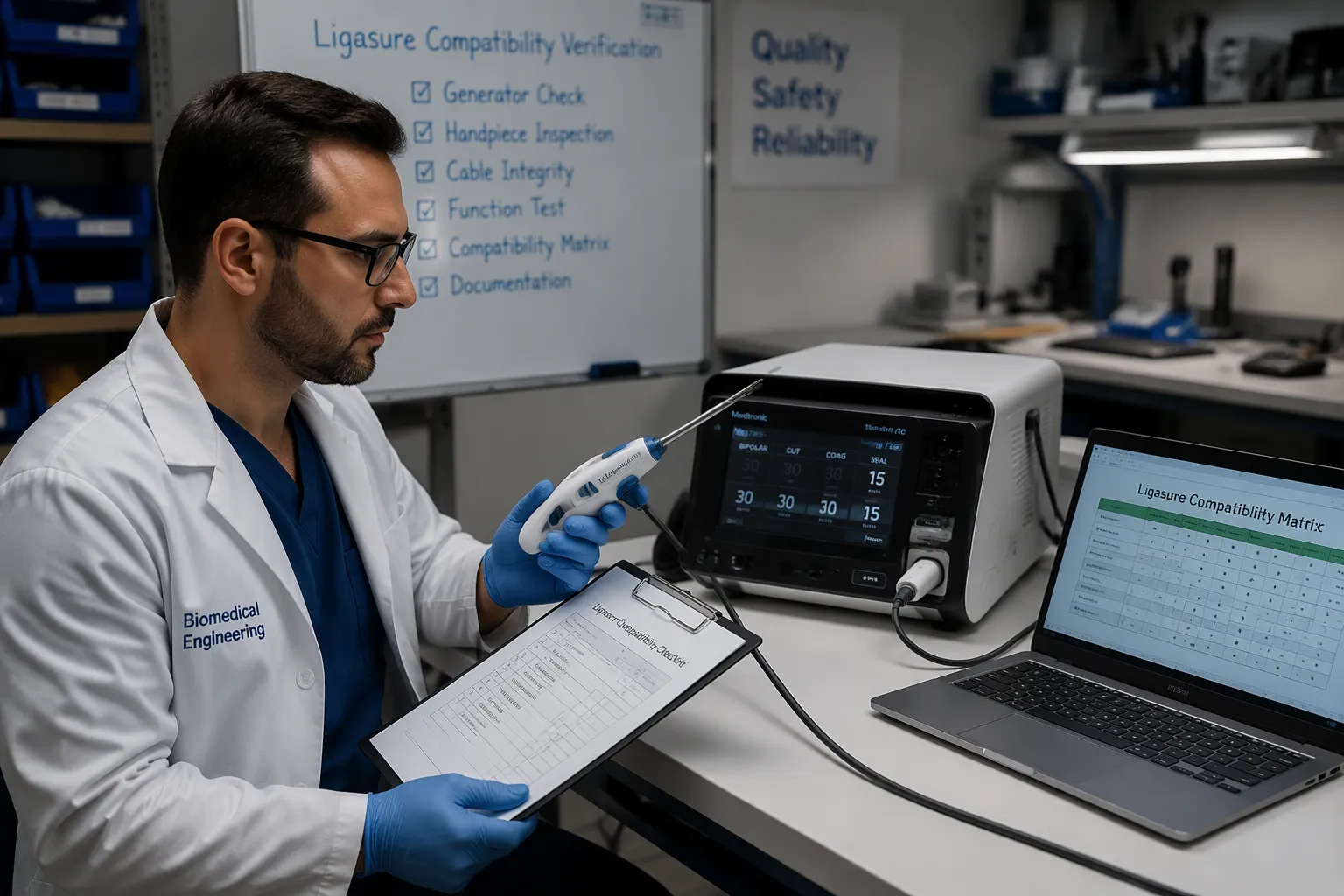
Third-party instruments work best in programs that check things carefully. Your team needs the time and staff to test each pairing before it is used on a real patient. A hospital with a biomedical engineering group and a supportive OR champion is a good fit. A facility with high case volumes that can handle a pilot phase without schedule problems also works well. These teams treat compatibility as a project, not a checkbox. They also know how to stop a rollout that fails its tests.
Cost pressure alone is a weak reason to switch. A low unit price means little if your nurses lose setup time or your engineers spend hours checking compatibility. Weigh the savings against the labor and risk. Third-party options also suit teams that already run mixed fleets and have learned to document every pairing. If your facility lacks that discipline, a matched system is the safer starting point. Start small, measure results, and expand only after the data supports it.
Verifying Harmonic Ligasure Compatibility
Verification follows a clear order. Work through these steps before you approve any harmonic ligasure purchase:
Confirm the exact generator model and firmware version in each OR.
Ask the supplier for written compatibility documents that name your generator and energy type.
Check whether you need an adapter and whether it is available for your handpiece model.
Pilot-test the pairing with OR staff on benchtop models and in a dry lab.
Address your team's daily concerns during the pilot. Ask scrub nurses to rate handle ergonomics and confirm the setup needs no manual tuning. Engineers should verify that the generator recognizes the instrument without workarounds. Finally, confirm the supplier provides training and technical support in your time zone. A supplier who supports your staff after the sale protects your workflow for years. Document every result and keep it with your procurement file. A clear paper trail also helps during surveys and audits.
Third-party harmonic ligasure instruments do not work right away with energy generators. You must first check that they work with your exact generator model and energy type. The problems are technical, the safety checks are real, and the regulatory and warranty risks are yours to handle. Cost savings only count after you subtract the work of checking and the risk of downtime.
Third-party options can still work well inside a checked, well-run program. A matched system makes that work easier. Qianjing Medical's Vessel Sealing and Cutting System pairs its instruments with the dedicated SM5000 generator, so one vendor handles checking and training. Whatever path you choose, check before you buy.
FAQ
Do third-party harmonic ligasure instruments work with any generator?
No. Each instrument needs a generator that matches its energy type and control logic. Some LigaSure 5-mm blunt-tip handpieces work on most generators if you buy an adapter. That adapter fits only certain models. Before you buy, get written proof that your exact generator and handpiece pairing works.
What documents should I request from a supplier?
Ask for written compatibility papers that name your generator model, firmware version, and energy type. Request the instructions for use and any adapter details. Keep these records in your procurement file. They back up your pilot testing and help during surveys and audits.
How do I test a new pairing before clinical use?
Follow a short set of steps. Confirm the generator model in each OR, then ask for written compatibility documents. Check that an adapter is available for your handpiece. Last, run a benchtop and dry-lab pilot with your OR staff. Rate how the handle feels and confirm the setup needs no manual tuning.
What does a matched system offer my team?
A matched system pairs one vendor's generator with its own instruments. Qianjing Medical's Vessel Sealing and Cutting System uses the dedicated SM5000 generator, with bipolar coagulation up to 180W and bipolar cut up to 100W. It seals vessels up to 7 mm and holds CE marking and ISO 13485 certification. One vendor handles checking and training.
Who should avoid third-party instruments?
Facilities with no time for pilot testing should start with a matched system. The same goes for sites without biomedical engineering support or an OR champion. Cost pressure alone is a weak reason to switch. Weigh savings against setup labor, checking hours, and downtime risk.
