


 info@qjmed.com



Can Alternative Harmonic Ligasure Devices Reliably Seal 7mm Vessels?
Introduction
If you are evaluating harmonic ligasure alternatives for your OR, the 7 mm vessel question is the one that usually stops the conversation. It is a fair concern. For years, the clinical consensus held that ultrasonic energy—the technology behind most harmonic devices—struggled beyond 5 mm, while advanced bipolar platforms were the safer bet for larger vessels. That perception shaped purchasing decisions and surgical habits across general surgery, thoracic surgery, and gynecology.
But the evidence in 2026 looks different. A new generation of harmonic ligasure devices—ultrasonic, bipolar, and hybrid—has been explicitly tested against 5–7 mm vessels, with sealing success rates that match or approach established platforms. The real question is no longer whether an alternative can seal 7 mm vessels. It is whether the specific device you are considering has been validated to do so, and what parameters separate a reliable alternative from a risky substitution.
This guide answers that question directly. It separates historical limitations from current performance, explains the numbers that actually predict seal reliability, and gives procurement teams a practical framework for evaluating harmonic ligasure alternatives for 7 mm vessel sealing.
Key Takeaways
The 5–7 mm “limitation” of ultrasonic energy is no longer absolute. It was a characteristic of early 5 mm shears, not of the energy type itself.
Older ultrasonic platforms showed real failure rates at 7 mm. In comparative testing, the Harmonic Scalpel Ace Plus had a 20% bursting failure rate on medium (5.1–7 mm) arteries and 40% on large vessels.
Newer and validated alternatives close that gap. Randomized trials in thoracoscopic surgery have shown 100% sealing success for 5–7 mm vessels with alternative ultrasonic devices, meeting non-inferiority against established platforms.
Burst pressure above 360 mmHg is the practical benchmark. That figure—roughly three times normal systolic pressure—is used as the lower specification limit for advanced vessel sealing devices.
Energy type matters less than validation. A harmonic ligasure alternative is credible for 7 mm vessels when it has device-specific clinical data and a stated burst-pressure specification at that diameter.
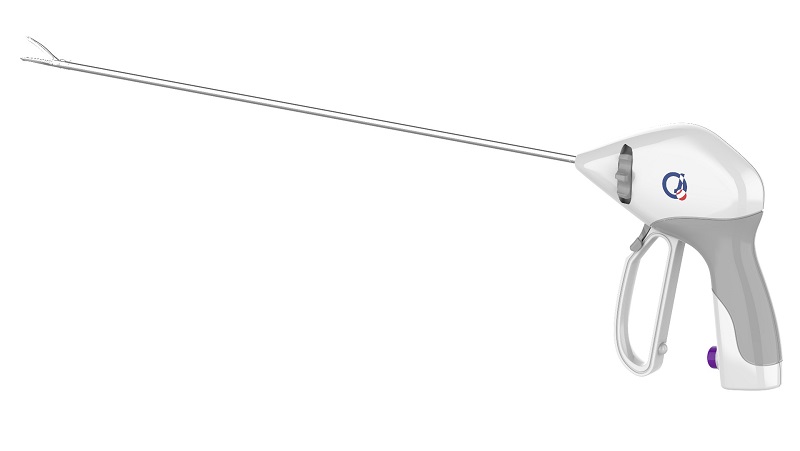
Qianjing’s Vessel Sealing and Cutting Systemis engineered around these exact parameters: 7 mm sealing, >360 mmHg burst pressure, and <2 mm thermal spread.
Why 7mm Is the Threshold That Matters
Vessel diameter is not a minor technical footnote. It determines which energy device a surgeon can safely reach for, and in many procedures—thoracoscopic lobectomy, bariatric surgery, colorectal resection—the 5–7 mm range is exactly where the critical vessels sit. Endostaplers can be awkward in narrow fissures, and clips can slip and obscure the field. That is why the 7 mm claim carries so much weight in harmonic ligasure evaluations.
Historically, ultrasonic shears were limited to sealing vessels up to 3 mm in early 5 mm designs, and later versions extended toward 5 mm. The inability to seal in the 5–7 mm range became a widely repeated limitation—so widely repeated that many procurement teams still treat it as a fixed rule.
The problem is that the rule outlived the technology. As one clinical review put it, sealing 5–7 mm vessels is not a limitation of the energy type but of how energy is delivered to tissue. The question for 2026 is therefore device-specific: does this harmonic ligasure alternative control compression, energy delivery, and seal completion well enough to produce a durable seal at 7 mm?
What the Clinical Evidence Actually Shows
The Historical Concern Was Real
The skepticism did not come from nowhere. In a comparative animal study testing five energy-based vessel sealing devices across 246 vessels, the Harmonic Scalpel Ace Plus showed bursting-pressure failures in 20% of medium (5.1–7 mm) arteries and 40% of large arteries. The LigaSure and Harmonic Ace +7 platforms had no bursting failures up to 9 mm in that same study.
That data point is useful for two reasons. First, it confirms that not every ultrasonic device is a safe 7 mm choice. Second, it shows that the gap is closable: newer platforms in the same technology family eliminated the failure signal.
The Newer Evidence Supports Validated Alternatives
The more recent evidence is more encouraging for harmonic ligasure alternatives—provided the device has been tested at the relevant diameter.
A multicenter randomized controlled trial in thoracoscopic surgery compared an alternative ultrasonic shears device with the HARMONIC ACE +7 Shears for sealing 5–7 mm blood vessels. Both groups achieved a 100% sealing success rate, with no intraoperative failures and no postoperative bleeding-related reoperations.
A separate 2026 randomized non-inferiority trial compared another alternative ultrasonic platform with the Harmonic HD 1000i for 5–7 mm pulmonary vessels. Intraoperative sealing success was 100% in the alternative group and 98.88% in the established-device group; the difference was not statistically significant, and the alternative met the non-inferiority endpoint.
These trials do not mean anyharmonic ligasure alternative will perform at that level. They mean the category has matured: an alternative can reliably seal 7 mm vessels when its energy delivery and jaw mechanics are engineered for that tissue load—and when that performance is documented.
The Numbers That Predict Seal Reliability
When you strip away marketing language, three specifications tell you whether a harmonic ligasure alternative is credible at 7 mm.
Burst Pressure
Burst pressure is the pressure at which a sealed vessel reopens. For advanced vessel sealing devices, a lower specification limit of 360 mmHg—about three times normal systolic pressure—is commonly used as the threshold for clinical reliability. Qianjing’s Vessel Sealing and Cutting System specifies a burst pressure exceeding 360 mmHg, which is the same order of magnitude used to define reliable seals for advanced bipolar devices.
For context, the Harmonic HD 1000i has reported median burst pressures in the 1,800 mmHg range for 5–7 mm vessels in benchtop testing, while LigaSure Maryland has reported figures around 1,100–1,200 mmHg. The point is not that every device must hit those medians. The point is that a device claiming 7 mm reliability should publish a burst-pressure specification above the 360 mmHg floor, not merely state that it “seals up to 7 mm.”
Thermal Spread
Lateral thermal damage is the second reliability variable. A seal that holds but injures an adjacent nerve or ureter is not a clinical success. Published data for LigaSure-class devices place lateral thermal damage in the range of roughly 1.5 mm, with some canine-model measurements around 1.3 mm. Qianjing specifies transverse thermal damage under 2 mm for its system. For harmonic ligasure alternatives used near critical structures, a stated thermal-spread figure below 2 mm is a meaningful differentiator.
Seal Cycle Consistency
A 7 mm seal is only useful if it forms in a predictable time window and releases cleanly. Repeated sticking and eschar buildup force instrument exchanges and interrupt rhythm. Jaw coatings, compression geometry, and automatic seal-completion detection all contribute to consistency. These are engineering details, but they show up in the only metric that matters at the bedside: whether the device completes the seal on the first attempt, every time.
Comparison Table: What Separates a Reliable 7mm Alternative from a Risky One
| Evaluation Criterion | Red Flag (Weak Alternative) | Reliable Alternative Standard | Why It Matters for 7mm Sealing |
|---|---|---|---|
| Stated vessel diameter | “Seals up to 7 mm” with no supporting data | 7 mm sealing supported by device-specific burst-pressure data | The 5–7 mm range is where older ultrasonic designs showed failure |
| Burst pressure | No figure published, or only “high” | ≥360 mmHg, stated at the relevant diameter | 360 mmHg is the practical lower limit for advanced sealing |
| Thermal spread | No figure, or >3 mm | <2 mm lateral thermal damage | Protects nerves and adjacent organs in tight anatomy |
| Clinical evidence | Animal data only, or no 5–7 mm subgroup | Randomized or comparative data at 5–7 mm | The 7 mm claim should be tested at 7 mm, not extrapolated from 3 mm data |
| Seal-cycle consistency | Frequent sticking or incomplete cuts reported | Anti-stick jaw surface, clean release, consistent cycle time | Incomplete cuts and sticking disrupt workflow and increase exchanges |
| Energy platform fit | Requires full platform replacement | Compatible with existing generators, or supplied as a complete system | Compatibility determines total cost of adoption |
How to Evaluate a Harmonic Ligasure Alternative for 7mm Use
Step 1: Ask for the Burst-Pressure Specification at 7mm—Not Just “Up to 7mm”
A device that seals 3 mm vessels beautifully may fail at 7 mm if the jaw compression and energy algorithm are not tuned for thicker tissue bundles. Request a burst-pressure figure generated at the 5–7 mm diameter, not an aggregate number across all vessel sizes. If the supplier cannot provide that, the 7 mm claim is marketing, not engineering.
Step 2: Confirm the Thermal-Spread Figure
For procedures near the recurrent laryngeal nerve, ureter, or major vessels, thermal spread is a safety variable. A harmonic ligasure alternative with a stated sub-2 mm lateral thermal profile is easier to justify in credentialing and procurement review than one with no thermal data.
Step 3: Match the Instrument Form Factor to Your Case Mix
A high-volume laparoscopic program needs a slim, port-compatible harmonic ligasure device with a rotatable shaft and a jaw profile suited to confined spaces. An open-surgery-heavy program may prioritize a robust jaw and fast transection of broad bundles. Qianjing’s portfolio addresses both: SM series handpieces for open and routine sealing, and QEB 5 mm laparoscopic handpieces and electrodes for minimally invasive access, alongside QF scissor electrodes for fine dissection and mechanical cutting.
Step 4: Check Generator Compatibility and Adoption Cost
The cheapest device on paper becomes expensive if it requires replacing your entire energy platform. Look for a system that either integrates with your existing bipolar generator or is supplied as a complete, calibrated platform. Qianjing’s SM5000 generator is specified as a standalone vessel sealing and cutting platform, which simplifies adoption for facilities building a dedicated energy setup.
Step 5: Verify Certification and Documentation
For hospital tenders and government procurement, CE marking, ISO 13485 quality management certification, and a Free Sale Certificate are baseline requirements. Qianjing holds CE and ISO 13485 certification and supports tender documentation—a practical consideration that often determines whether a technically capable harmonic ligasure alternative can actually be purchased.
A Practical Example: Qianjing’s Vessel Sealing and Cutting System
Qianjing’s system is positioned as a harmonic ligasure alternative built around the parameters this guide has outlined. The SM5000 platform supports:
7 mm vessel and tissue-bundle sealing in a single activation cycle;
Burst pressure exceeding 360 mmHg, aligning with the 3× systolic benchmark used to define reliable seals;
Transverse thermal damage under 2 mm, which matters when sealing near critical anatomy;
Anti-stick jaw surfaces and low smoke generation, supporting a clear endoscopic field and fewer cleaning interruptions;
Compatibility with SM handles, QEB 5 mm laparoscopic handpieces, and QF scissor electrodes, covering open and minimally invasive workflows.
For teams evaluating a harmonic ligasure alternative, the practical value of this configuration is that it addresses the 7 mm question at the level where it is actually decided: energy delivery, compression, thermal control, and instrument fit—not just a diameter label on a brochure.
FAQ
Final Thoughts
The question “can alternative harmonic ligasure devices reliably seal 7 mm vessels?” has a clearer answer in 2026 than it did five years ago. The historical limitation was real, but it belonged to a generation of ultrasonic shears that were not engineered for that tissue load. Validated alternatives now exist—and randomized evidence shows that the right alternative can match established platforms at 5–7 mm.
The decision rule is simple: do not buy a diameter claim; buy a validated specification. Look for 7 mm burst-pressure data above 360 mmHg, thermal spread under 2 mm, a form factor that fits your case mix, and documentation that supports your procurement process. Qianjing’s Vessel Sealing and Cutting System is built around those specifications, offering a harmonic ligasure alternative that treats 7 mm sealing as an engineering requirement rather than a marketing line. For facilities seeking a reliable, tender-ready energy solution, that is the difference worth evaluating.
