


 info@qjmed.com



Understanding Laparoscopic Surgical Staplers for Modern Minimally Invasive Surgery
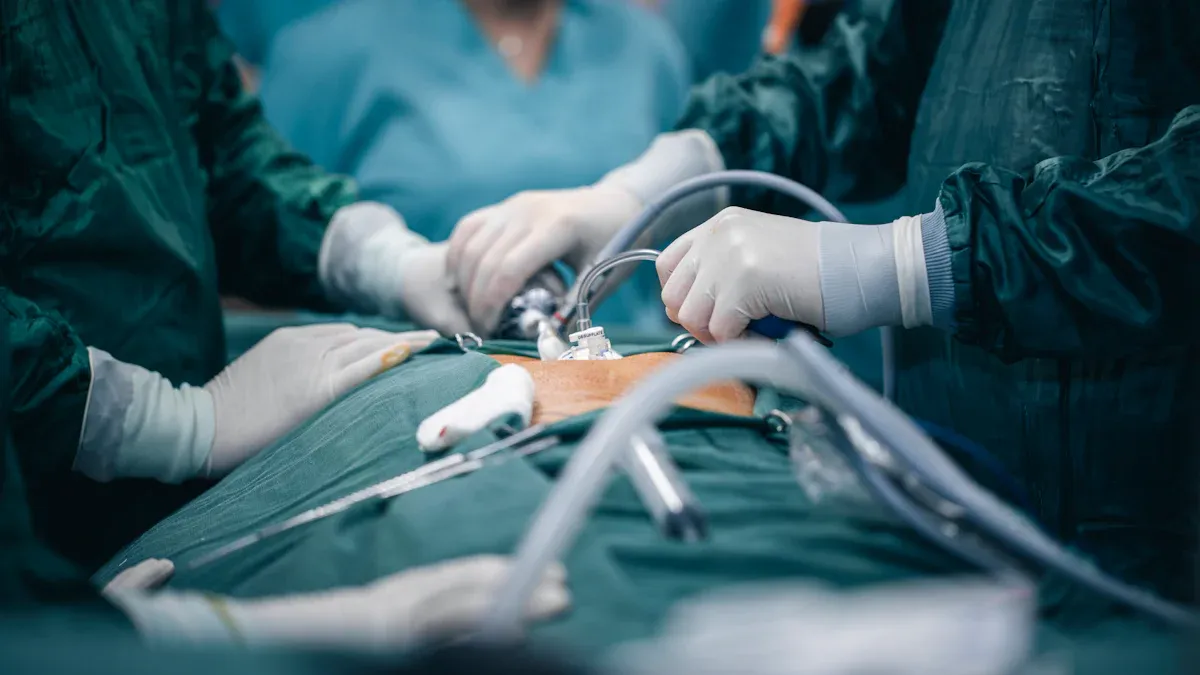
A laparoscopic surgical stapler plays a vital role in modern surgery. Surgeons use this stapler to fasten, cut, and close tissues inside the body during minimally invasive surgery. The device allows them to operate through small incisions, reducing trauma. A surgical stapler can quickly secure tissue, sometimes faster than traditional suturing. The STILS trial found that the stapler offered similar complication rates to sutures, with marginally quicker closure.
Method Outcome Description Evidence Quality Staples No definitive conclusion on wound infection, readmission rate, or adverse events. Low Quality Sutures May reduce postoperative pain and improve satisfaction with cosmetic outcomes. Low Quality
Surgeons value the laparoscopic surgical stapler for its precision and reliability. This stapler supports better outcomes and advances in minimally invasive surgery.
Key Takeaways
Laparoscopic surgical staplers enhance minimally invasive surgery by allowing surgeons to fasten, cut, and close tissues through small incisions, reducing trauma and recovery time.
Modern staplers feature advanced technologies, such as 3D Stapling and enhanced gripping surfaces, which improve precision and reduce complications during surgery.
Choosing the right stapler for each procedure is crucial. Factors like tissue thickness, procedure type, and safety features should guide surgeons in their selection.
Surgeons must prioritize safety by understanding the stapler's mechanisms and ensuring proper training to minimize risks of device malfunction during operations.
Laparoscopic techniques using staplers lead to fewer surgical site infections and faster recovery, making them a preferred choice over traditional suturing methods.
Laparoscopic Surgical Stapler Overview
Device Definition
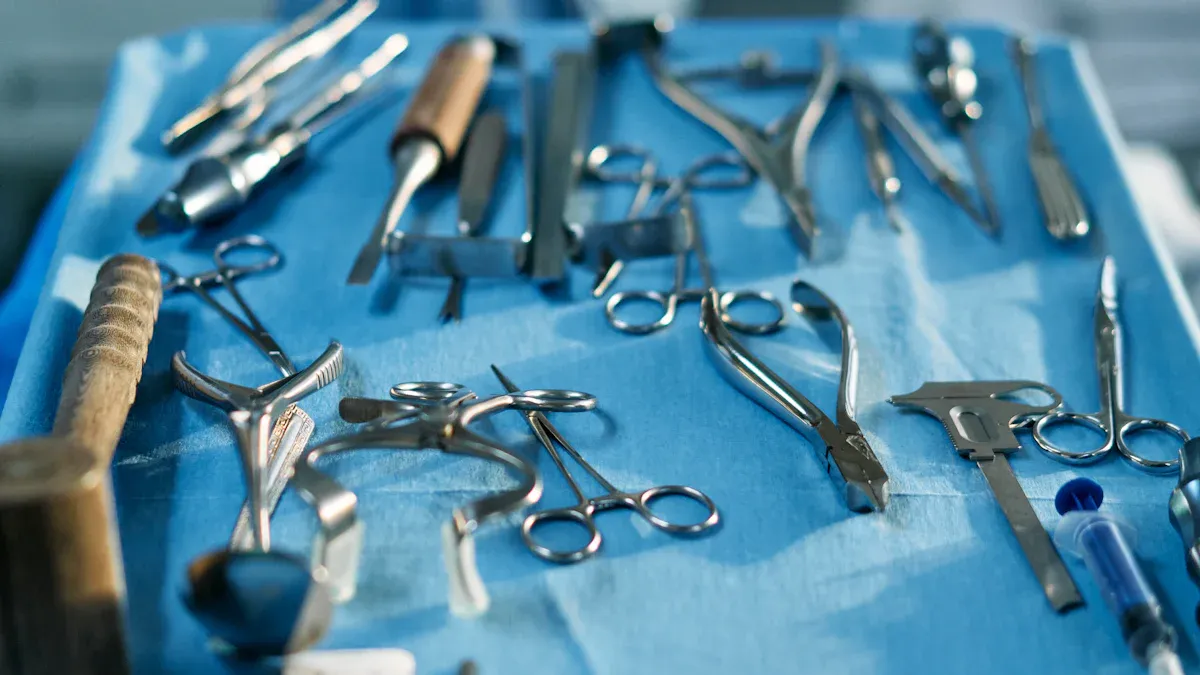
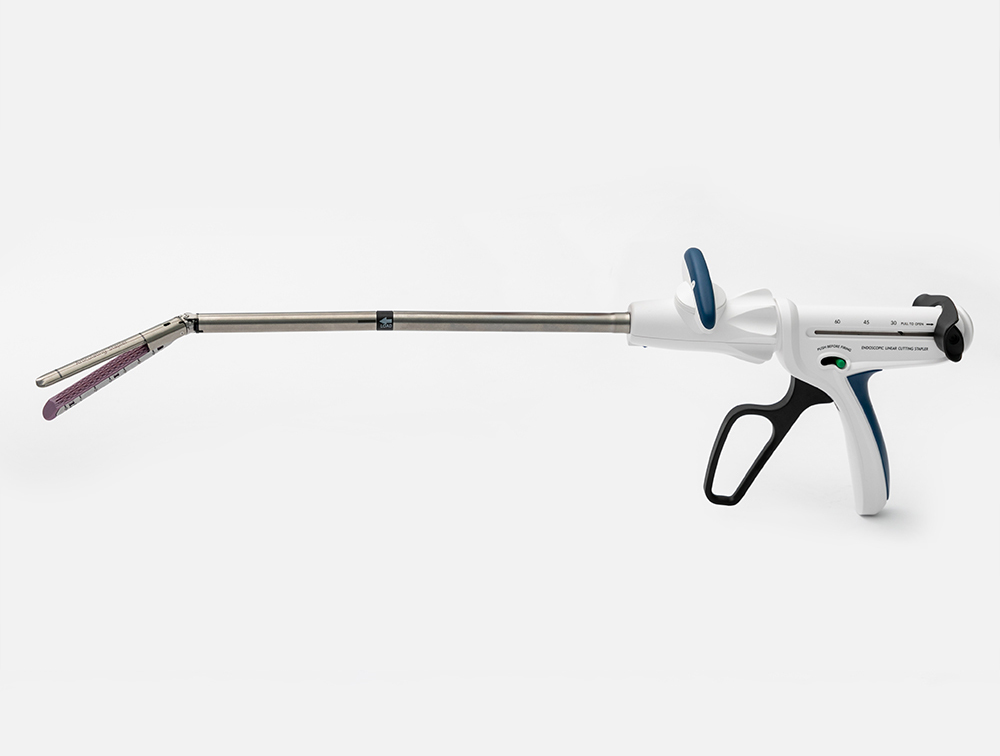
A laparoscopic surgical stapler is a specialized tool designed for use in minimally invasive surgery. Surgeons rely on this device to fasten, cut, and close tissue through small incisions. The flexible surgical stapler allows for precise control, even in hard-to-reach areas. Hospitals commonly use several types of staplers in laparoscopic procedures:
Laparoscopic staples
Circular staplers
Linear staplers
Each flexible surgical stapler type serves a unique purpose in surgery. Reliable stapling ensures surgeons achieve secure closures, even in complex anatomical regions. This capability highlights the importance of a surgical stapling device in modern operating rooms.
Note: The flexible surgical stapler supports minimally invasive techniques, which help reduce patient trauma and speed up recovery.
Key Features
A flexible surgical stapler contains several essential components that work together to deliver consistent results. The table below outlines the primary parts found in most devices:
| Component | Description |
|---|---|
| Firing part | The mechanism that activates the stapler to deploy staples. |
| Stapling component | The part that holds and forms the staples during the surgical procedure. |
| Surgical stapler cartridge | An essential component that works with the firing part for effective stapling. |
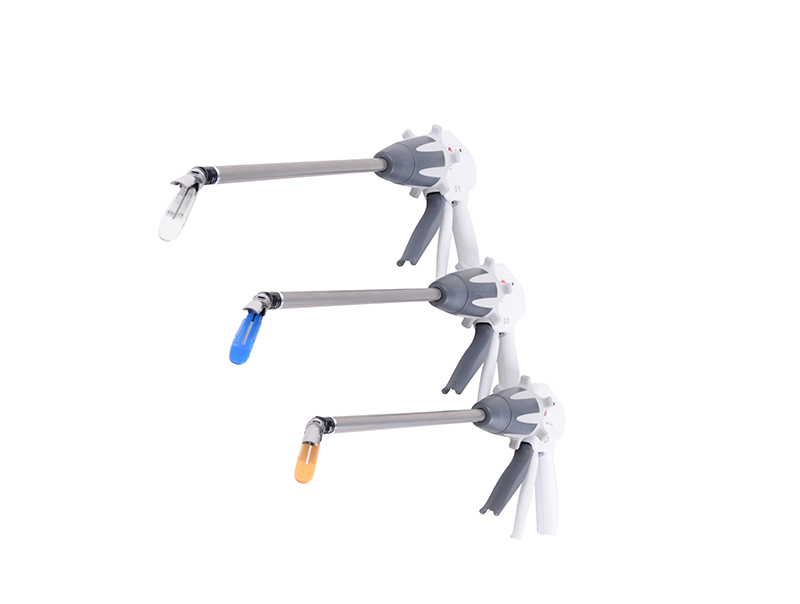
Modern flexible surgical staplers offer advanced features that set them apart from earlier models. These advancements include:
| Feature/Advancement | Modern Laparoscopic Staplers | Earlier Models |
|---|---|---|
| Disposable units | Yes | No |
| Color-coded reloads for tissue types | Yes | No |
| Ability to manipulate through trocars | Yes | Limited/No |
| Designed for minimally invasive surgery | Yes | No |
Recent innovations have further improved the flexible surgical stapler. For example:
The latest 3D Stapling Technology improves staple line consistency and reduces bleeding.
Enhanced Gripping Surface Technology stabilizes tissue and minimizes slippage.
New linear cutters combine 3D stapling and gripping technology, reducing leaks and improving safety.
These features make the flexible surgical stapler a critical tool in surgery. Surgeons can depend on the stapler for reliable performance, which leads to better patient outcomes.
Surgical Stapling Device Mechanism
Stapling and Cutting Process
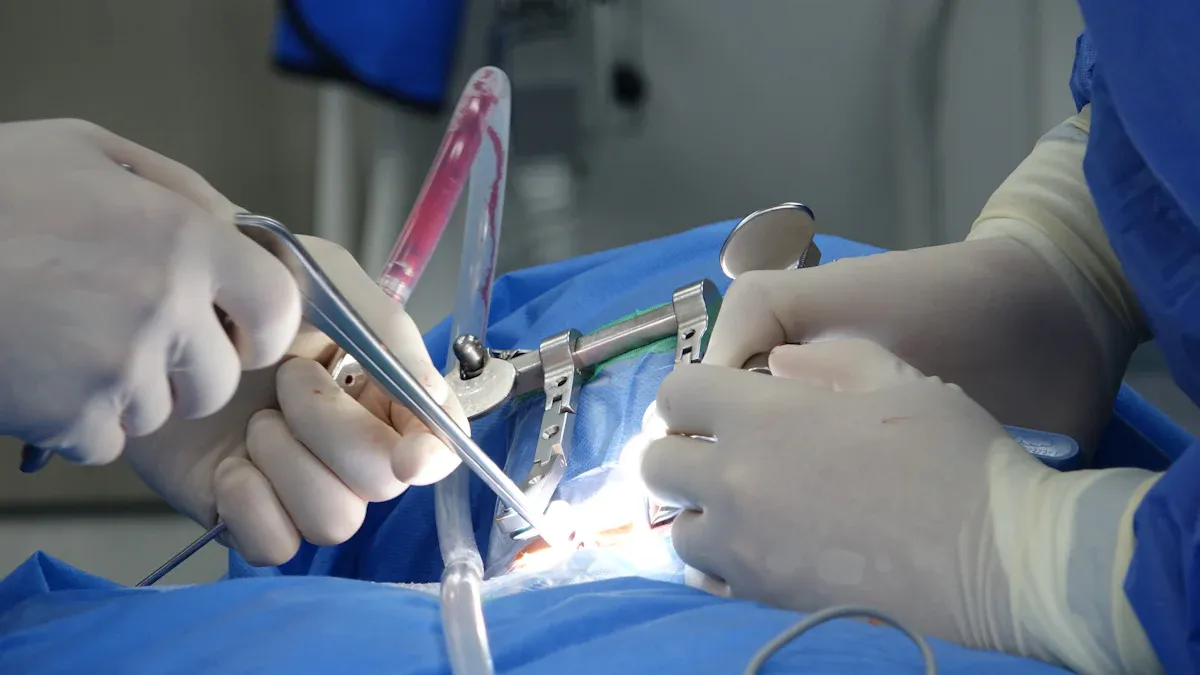
The surgical stapler mechanism plays a crucial role in modern minimally invasive surgery. Surgeons rely on the stapler to perform two essential functions: cutting and stapling tissue. During procedures, the laparoscopic stapler applies evenly spaced rows of staples while simultaneously cutting the tissue. This dual action streamlines the process, allowing surgeons to close and divide tissue in one step. The stapler provides a strong closure that maintains tissue integrity and prevents bleeding, which is especially important in gastrointestinal and colorectal surgery.
The integration of cutting and stapling into a single action reduces operative time and minimizes the risk of complications. Surgeons achieve greater precision, which is vital for delicate procedures.
Laparoscopic linear cutter staplers enhance safety by ensuring consistent staple formation. The device fires staples in a controlled manner, reducing the chance of misfires or malformed staples. Although surgical staplers generally have low failure rates, malfunctions can occur. Common issues include failure to fire and malformed staples. In a review of 565 laparoscopic nephrectomies, device malfunction occurred in 1.7% of cases. Other studies reported malfunction rates between 0.2% and 1.1%.
Surgical staplers generally have low failure rates, but specific malfunctions can occur, including failure to fire and malformed staples.
A study indicated that the malfunction rate of staplers ranged from 0.2% to 1.1%.
In a review of laparoscopic nephrectomies, device malfunction was reported in 1.7% of cases.
Surgeons must remain vigilant for potential complications. Faulty staplers can lead to serious problems such as sepsis, staple line leaks, internal bleeding, and organ damage. Leaks from staple lines are a significant cause of morbidity and mortality in bariatric surgery. Proper device selection and technique help minimize these risks.
Sepsis and life-threatening infections may result from improper sealing of tissues.
Staple line leaks and internal bleeding can occur due to defective staplers.
Organ damage and permanent injury may happen if the stapler misfires.
Prolonged recovery and additional surgeries are possible when complications arise.
Leaks from staple lines are a major concern in bariatric procedures.
Laparoscopic techniques, which use the surgical stapler, involve smaller incisions (0.5 to 1.5 cm). These smaller incisions reduce tissue damage and exposure to contaminants, minimizing infection risk. An umbrella review found that laparoscopic procedures result in 48-70% fewer surgical site infections compared to open surgery.
Laparoscopic techniques involve smaller incisions, leading to less tissue damage and reduced exposure to contaminants.
Laparoscopic procedures result in 48-70% fewer surgical site infections compared to open surgeries.
Tissue Interaction
The interaction between the stapler and tissue is complex. The surgical stapler applies mechanical loads that vary based on the properties of the target tissue. Factors such as age, sex, ethnicity, and disease state influence how the stapler interacts with tissue during surgery. Different tissue types, even with identical geometry, can experience varying radial stresses due to differences in material stiffness.
Surgical stapling applies complex mechanical loads on tissue, which vary based on the material properties of the target tissue.
Factors such as age, sex, ethnicity, and disease state influence the mechanical interaction.
Different tissue types with identical geometry can experience varying radial stresses due to differences in material stiffness.
The stapler creates radial stress that maintains tissue apposition, preventing leakage into the peritoneal space. This stress helps maintain hemostasis at the transection site and regulates local perfusion, which may influence wound healing through mechanosensitive pathways.
Radial stress from staples maintains tissue apposition, preventing leakage into the peritoneal space.
It helps maintain hemostasis at the transection site.
Regulates local perfusion, which may influence wound healing through mechanosensitive pathways.
Advanced technologies, such as Tri-Staple, enhance tissue compression and optimize the interaction between tissue and staple. These innovations generate less stress during compression, allow for better perfusion into the staple line, and perform effectively across varying tissue thicknesses. Surgeons benefit from improved outcomes and reduced complications.
| Evidence Type | Findings |
|---|---|
| Manual Sutures | Safe and feasible for robotic distal pancreatectomy (RDP), equivalent to staplers in reducing postoperative pancreatic fistula (POPF) rate. |
| Operative Time | Manual suturing had a shorter operative time compared to staplers in this study, despite other reports suggesting otherwise. |
| Closure Technique | Manual suturing allows for individualized stitching, potentially leading to better closure of the pancreatic duct and reduced POPF rates. |
The surgical stapler remains a vital tool in minimally invasive surgery. Surgeons depend on the stapler for reliable tissue closure, reduced operative time, and improved patient safety. The surgical stapler mechanism continues to evolve, supporting better outcomes and advancing surgical practice.
Applications in Minimally Invasive Surgery
Specialty Uses
Surgeons use a surgical stapler in many laparoscopic procedures across different specialties. The stapler helps them perform complex tasks through small incisions, which supports the goals of laparoscopy. The table below highlights the most common specialties and procedures where the stapler plays a key role:
| Surgical Specialty | Procedures |
|---|---|
| Gastrointestinal | Gastrectomies, colectomies, bariatric bypasses |
| Thoracic | Lung resections, sealing bronchial stumps |
| Gynecological | Hysterectomies, vaginal vault closure |
| Urologic | Prostatectomy, nephrectomy |
| Colorectal | Low anterior resections, rectal anastomoses |
Each specialty relies on the stapler to achieve secure closure and precise tissue management. In gastrointestinal surgery, the surgical stapler allows for safe removal of stomach or colon segments. Thoracic surgeons use the stapler to seal lung tissue and bronchial stumps. Gynecologists depend on the stapler for hysterectomies and closing the vaginal vault. Urologists and colorectal surgeons also benefit from the stapler’s efficiency and reliability during laparoscopy.
Benefits Over Suturing
The stapler offers several advantages over traditional suturing in minimally invasive surgery. Surgeons often choose the surgical stapler because it improves speed and safety during laparoscopic procedures.
The stapler reduces operative time, working up to three times faster than sutures.
Using the stapler helps manage anesthetic gas more efficiently, which shortens anesthesia time.
Powered endoscopic staplers provide greater precision and speed, lowering the risk of complications.
Powered stapler technology allows for accurate staple placement. This accuracy increases the speed of surgery and reduces the risk of problems that can occur with sutures. The stapler applies even pressure across tissue, which helps prevent leaks and strictures after surgery. Surgeons find that the stapler supports better outcomes and faster recovery for patients undergoing laparoscopy.
Tip: Choosing the right stapler for each procedure can further enhance safety and efficiency in laparoscopic procedures.
Choosing the Right Stapler
Safety Considerations
Surgeons must prioritize safety when selecting a stapler for minimally invasive surgery. Modern laparoscopic staplers feature powered mechanisms and smart sensing systems that help prevent misfires. These technologies reduce the risk of intraoperative complications and improve patient outcomes. Training and structured protocols play a critical role in safe device operation. Surgeons who recognize and manage stapler failures quickly can minimize harm.
Common safety incidents include device malfunctions, which sometimes force surgeons to change their surgical plans. About 25% of minimally invasive surgeons have reported significant changes due to stapler issues. To address these risks, hospitals focus on several strategies:
Improve event reporting to document incidents accurately.
Consider user familiarity with the stapler during purchasing decisions.
Plan ahead for emergencies, such as hemorrhage.
Enhance user training for all stapler models.
Powered staplers often show lower rates of bleeding complications during sleeve gastrectomy. Large-scale analyses reveal that powered staplers provide better economic outcomes and fewer bleeding events compared to manual staplers. Some models, such as ECHELON Powered Staplers, report complication rates below the national average for bariatric procedures.
Tip: Surgeons should always verify the safety features of each surgical stapler before use, including reload indicators and lockout mechanisms.
Procedure Matching
Matching the right stapler to the specific surgery ensures optimal results. Surgeons evaluate several criteria to select the best device for each procedure. The following table summarizes key factors:
| Criteria | Description |
|---|---|
| Procedure Type | Match the stapler to the surgery’s complexity, such as specialized staplers for thoracic procedures. |
| Tissue Thickness | Choose staplers with adjustable staple heights for different tissue densities. |
| Ergonomics | Select lightweight staplers to reduce fatigue during long operations. |
| Safety Features | Look for reload indicators and lockout mechanisms to minimize misfires. |
| Cost Efficiency | Balance upfront costs with long-term savings from reduced complications. |
Surgeons also consider closure methods and complication severity. Studies show that laparoscopic staplers do not outperform hand-sewn closures in reducing major complications, but they often result in lower severity of complications. The choice of stapler can affect outcomes, especially in complex surgeries.
Selecting the appropriate surgical stapler improves reliability and safety in the operating room. Surgeons who match device type to surgical needs help ensure better patient recovery and fewer complications.
Laparoscopic surgical staplers feature intricate designs that support controlled motion and precise tissue closure during surgery. The table below highlights their mechanism and benefits:
| Key Points | Description |
|---|---|
| Design Complexity | Multiple mechanical components enable controlled movement. |
| Operational Principles | Links and joints allow the stapler to reach targeted areas in surgery. |
| Benefits | Enhanced precision and efficiency for complex, minimally invasive procedures. |
Surgeons rely on the stapler to improve patient recovery by reducing complications and shortening hospital stays. Patient satisfaction rates reach 83.9% for laparoscopic surgery compared to 69.6% for traditional methods. When selecting a surgical stapler supplier, Qianjing stands out for its variety, ease of maintenance, and strong reputation. Choosing Qianjing ensures access to reliable staplers for every surgery.
FAQ
What is a laparoscopic surgical stapler used for?
Surgeons use a laparoscopic surgical stapler to fasten, cut, and close tissue during minimally invasive procedures. The device helps reduce operative time and supports precise tissue management.
How does a surgical stapler improve patient recovery?
A surgical stapler allows surgeons to operate through small incisions. This technique minimizes tissue trauma, lowers infection risk, and shortens hospital stays. Patients often experience faster recovery and less postoperative pain.
Are laparoscopic staplers safe to use?
Modern laparoscopic staplers include safety features such as lockout mechanisms and reload indicators. Surgeons receive training to handle these devices safely. Hospitals monitor device performance to minimize complications.
Can a stapler replace sutures in all surgeries?
Surgeons choose staplers for many procedures, but not all. Some surgeries require manual suturing for better control or individualized closure. The choice depends on tissue type and procedure complexity.
What should surgeons consider when selecting a stapler?
Surgeons evaluate procedure type, tissue thickness, ergonomics, and safety features. They select staplers that match surgical needs and prioritize devices with proven reliability and low complication rates.

Recent News
1.Surgical stapler manufacturers Ranking and introduction
2021-08-162.What are the advantages of Powered Surgical Staplers?
2022-09-303.How Surgical Staplers Are Revolutionizing Modern Medicine
2023-10-084.What is disposable laparoscopic trocar
2021-06-155.What is the applied medical laparoscopic trocars
2022-04-24