
 info@qjmed.com



Essential Instruments Used in Laparoscopic Surgery in 2026

Introduction
Laparoscopic surgery has moved from a niche alternative to the standard of care for a wide range of abdominal procedures. What once required a large incision is now accomplished through a few small ports, using long, precision-engineered instruments that reproduce open-surgery maneuvers inside the body.
At the center of every successful laparoscopic case is a carefully selected set of equipment used in laparoscopic surgery. From access devices that create the working space to energy platforms that seal vessels and staplers that divide tissue, each instrument plays a defined role. In 2026, the equipment used in laparoscopic surgery has become more refined, more ergonomic, and more procedure-specific than ever before.
This guide breaks down the essential instruments used in laparoscopic surgery in 2026. It is written for surgeons, OR nurses, and procurement teams who need a clear, practical reference—without unnecessary jargon. Whether you are building a new laparoscopic tray or evaluating your current setup, this article will help you understand what belongs in the room and why.
Key Takeaways
Access equipment—Veress needles and trocars—establishes the working space and port sites
Visualization systems—laparoscopes and cameras—provide the surgeon's view inside the abdomen
Graspers and dissectors handle tissue manipulation and blunt dissection
Energy devices (ultrasonic and advanced bipolar) manage hemostasis and tissue division
Endoscopic staplers transect and anastomose tissue in a single, controlled action
Suction-irrigation systems maintain a clear operative field
Disposable instruments reduce cross-contamination risk and simplify workflow
Qianjing Medical offers a comprehensive laparoscopic portfolio with CE and ISO 13485 certification
Core Categories of Equipment Used in Laparoscopic Surgery
Every laparoscopic procedure, regardless of specialty, relies on the same fundamental categories of equipment used in laparoscopic surgery. Understanding these categories helps surgical teams standardize trays and make rational purchasing decisions.
Access Equipment: Veress Needles and Trocars
Entry is where laparoscopic complications cluster. The equipment used in laparoscopic surgery for access includes two primary components: the Veress needle and the trocar.
A Veress needle (typically 120 mm or 150 mm) is a spring-loaded needle used to create pneumoperitoneum—the CO₂-filled working space inside the abdomen. The spring-loaded tip retracts when it passes through the abdominal wall, minimizing the risk of visceral injury.
Trocars are the ports through which all other instruments pass. They come in several designs:
Bladed trocars use a sharp cutting edge for easy penetration
Bladeless (optical) trocars separate tissue fibers rather than cutting them, reducing trauma
Balloon trocars are used in extraperitoneal procedures to anchor the port and prevent gas leakage
Trocar counts follow the procedure. A standard four-port cholecystectomy requires one 10 mm umbilical port, one 10 mm epigastric port, and two 5 mm lateral ports. Reducers (10-to-5 mm) are routinely forgotten but essential—without them, a 5 mm instrument in a 10 mm port leaks pneumoperitoneum continuously.
Visualization: Laparoscopes and Camera Systems
The laparoscope is the surgeon's eye inside the abdomen. Modern equipment used in laparoscopic surgery for visualization includes:
Laparoscopes: rigid telescopes available in 0° and 30° angles, in 5 mm and 10 mm diameters. The 30° scope is more versatile in the upper abdomen but harder to learn.
Camera systems: high-definition and 4K cameras that connect to the laparoscope and display the image on monitors
Light sources: fiber-optic cables that transmit light from an external source to the laparoscope tip
The angle of the laparoscope (0°, 30°, 45°, or 70°) is determined by the field of view required for the procedure.
Grasping and Dissecting Instruments
This is the largest category of equipment used in laparoscopic surgery and where naming can become confusing. The core instruments include:
Atraumatic graspers — long fenestrated jaws with fine serrations, designed to spread pressure across the tissue surface. Used for manipulating bowel, gallbladder, and omentum. Never use a toothed grasper on bowel; the damage may not be visible until it perforates.
Maryland dissectors — curved, fine-tipped forceps that serve as the workhorse for blunt dissection. The Maryland dissector is the single most-used instrument in many laparoscopic procedures, particularly for dissecting Calot's triangle in cholecystectomy.
Laparoscopic scissors — straight or curved blades for sharp dissection and tissue cutting. Even with advanced energy platforms, mechanical cutting remains preferred for fine, cold dissection.
Needle holders — for suturing and knot tying. Laparoscopic needle holders use a fixed jaw and a mobile jaw to pass the needle through tissue, with a knot pusher to slide knots into place.
Energy Devices
Energy platforms have transformed laparoscopic surgery by providing simultaneous cutting and coagulation with minimal thermal spread. The two major classes of equipment used in laparoscopic surgery in this category are:
Ultrasonic devices — use mechanical vibration to cut and coagulate tissue. They seal vessels up to 5 mm in diameter and produce less lateral thermal damage than monopolar electrosurgery.
Advanced bipolar devices — use electrical current to seal vessels. They provide precise hemostasis with controlled thermal spread and are often preferred for larger vessels.
Energy devices are used across a wide range of specialties, including gastrointestinal, urological, gynecological, and hepatobiliary procedures.
Endoscopic Staplers and Reloads
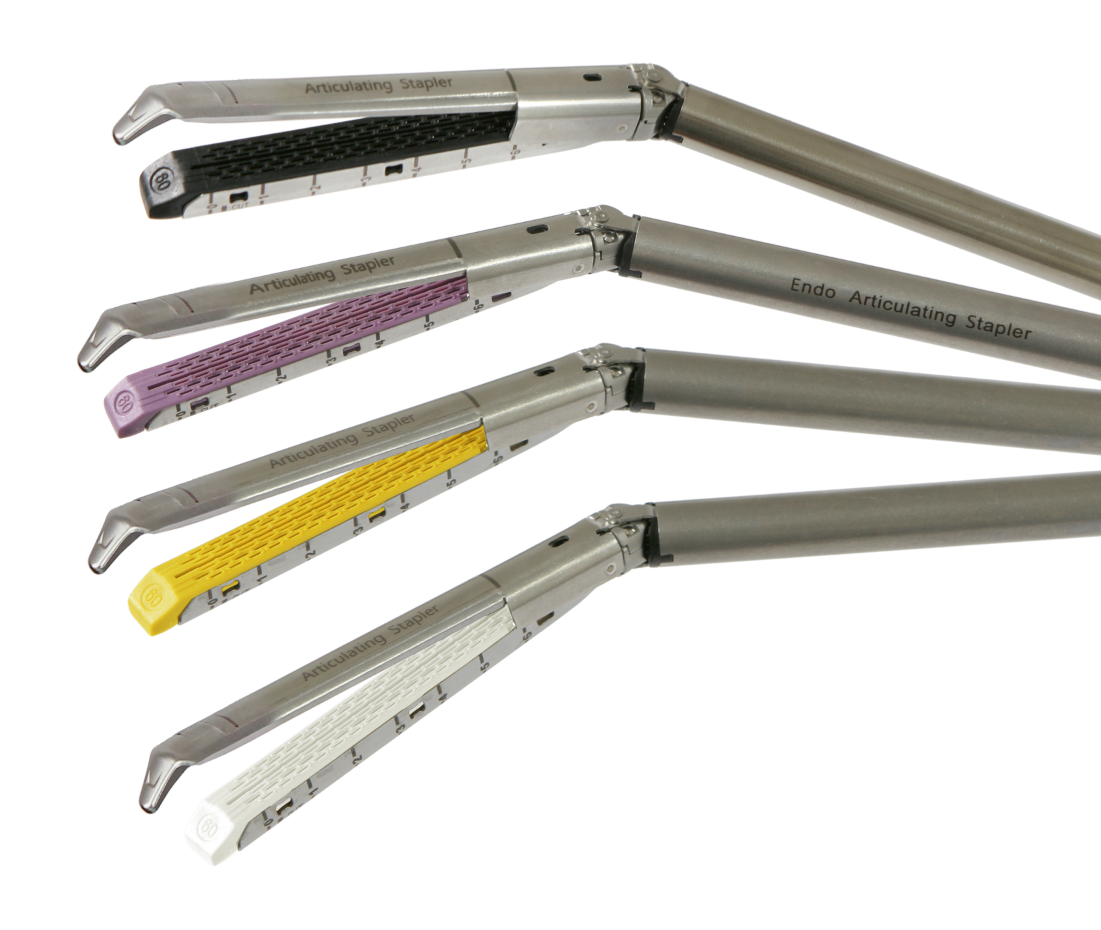
Endoscopic staplers combine stapling and cutting in a single pass, enabling efficient tissue division and anastomosis. When evaluating this category of equipment used in laparoscopic surgery, focus on:
Jaw profile and articulation: low-profile heads and multi-plane articulation improve access in confined spaces
Firing consistency: smooth, predictable firing minimizes tissue slippage
Reload portfolio: a color-coded cartridge family for thin to thick tissue helps standardize choices
Modern laparoscopic staplers place multiple rows of titanium staples and simultaneously cut and divide the tissue between the rows. Most bend each staple into a B-shape, which secures tissue while preserving blood flow.
Suction-Irrigation Systems
Suction-irrigation cannulas are tubular instruments that irrigate and aspirate fluid. They are essential for maintaining a clear operative field, managing minor bleeding, and cleaning debris from the surgical site. Tips may be blunt or needlepoint, depending on the application.
Clip Appliers
Clip appliers are used for vessel and duct ligation. They are most often disposable and require a larger port, such as a 12 mm trocar. Titanium clips are the standard for securing the cystic duct and artery during cholecystectomy.
Comparison Table: Essential Laparoscopic Instruments at a Glance
| Instrument Category | Primary Function | Typical Size | Reusable or Disposable | Key Consideration |
|---|---|---|---|---|
| Veress Needle | Create pneumoperitoneum | 2.1 mm × 120 mm | Disposable or reusable | Spring-loaded tip for safety |
| Trocars | Port access | 5 mm, 10 mm, 12 mm | Disposable preferred | Bladeless reduces trauma |
| Laparoscope | Visualization | 5 mm / 10 mm, 0° or 30° | Reusable | 30° for upper abdomen |
| Maryland Dissector | Blunt dissection | 5 mm × 330 mm | Disposable or reusable | Workhorse instrument |
| Atraumatic Grasper | Tissue manipulation | 5 mm × 330 mm | Disposable or reusable | Fenestrated jaws |
| Ultrasonic Device | Cutting and coagulation | 5 mm shaft | Disposable | Seals vessels up to 5 mm |
| Endoscopic Stapler | Transection and anastomosis | 12 mm port | Disposable | Articulating head |
| Suction-Irrigation | Field clearance | 5/10 mm × 330 mm | Disposable or reusable | Blunt or needle tip |
| Clip Applier | Vessel ligation | 5 mm or 10 mm | Disposable | Titanium clips |
How to Select the Right Equipment for Your Laparoscopic Program
Step 1: Match Instruments to Procedure Type
Different procedures require different configurations of equipment used in laparoscopic surgery:
Cholecystectomy: trocars (one 10 mm, two to three 5 mm), Maryland dissector, atraumatic grasper, clip applier, electrocautery hook
Bariatric surgery: longer instruments (450 mm working length), liver retractor, vessel sealer with cutter, endoscopic stapler
Gynecological procedures: bipolar forceps, laparoscopic scissors, needle holder, morcellator (as needed)
Colorectal surgery: endoscopic linear cutter stapler, purse-string stapler, suction-irrigation
Step 2: Decide Between Disposable and Reusable
Disposable equipment used in laparoscopic surgery offers clear advantages:
Eliminates cross-contamination risk from inadequate cleaning or sterilization
Ensures consistent performance with every use
Reduces sterilization costs and turnaround time
Simplifies inventory management
Reusable instruments can be cost-effective for high-volume units, but modular designs (separate handle, outer tube, and insert) are preferred because they allow individual components to be replaced and thoroughly cleaned.
Step 3: Verify Certification and Compatibility
Ensure your equipment used in laparoscopic surgery meets regulatory standards:
CE certification for European markets
ISO 13485 for quality management
NMPA (or equivalent regional approval) for the country of use
Check compatibility with existing platforms. Endoscopic staplers and reloads should be designed for seamless use with mainstream surgical systems.
Step 4: Prioritize Ergonomics
Surgeons have strong preferences about handle design—ring, axial, or pistol grip. Rotatable shafts, ambidextrous grips, and balanced weight distribution reduce forearm fatigue during long dissections. The AAGL guideline notes that while evidence comparing handle designs is limited, inline or intermediate handle configurations may be preferred for graspers, while conventional designs remain appropriate for routine use.
Quality Assurance and Safety in Laparoscopic Equipment
Pre-Operative Checks
Before any laparoscopic case, verify that all equipment used in laparoscopic surgery is functioning correctly:
Check that all power sources are connected and device units are switched on
Inspect the laparoscope for clarity and light cord fit
Test the Veress needle for proper plunger/spring function
Confirm the CO₂ insufflator is calibrated
Intra-Operative Safety
Follow sharp instruments (diathermy hook, scissors) with the camera during insertion and withdrawal to avoid inadvertent injury
Never activate an electrosurgical instrument in air; touch tissue before activating
Inspect insulation on monopolar instruments before and after use—a pinpoint hole can cause a patient burn
Wipe the tips of forceps, graspers, and scissors between uses with a wet sponge to remove debris
Use warm CO₂ to prevent fogging; a cold scope entering the body cavity can also cause fogging
Post-Operative Reprocessing
For reusable instruments, proper cleaning and sterilization are critical. Modular designs allow all three parts—handle, outer tube, and insert—to be brushed and flushed individually. For disposable instruments, proper disposal protocols should be followed to minimize environmental impact.
A Trusted Partner for Laparoscopic Instruments
Building a reliable laparoscopic program requires a supplier who understands both the clinical demands of surgery and the operational realities of the OR. Qianjing Medical has been at the forefront of the laparoscopic revolution for over 20 years, providing a comprehensive portfolio of equipment used in laparoscopic surgery—including endoscopic staplers, disposable trocars, ligating clips, and energy devices.
Qianjing Medical's laparoscopic product line is designed to meet the rigorous needs of surgeons worldwide:
Global certifications: CE, ISO 13485, and NMPA compliant
Advanced manufacturing: 2,000 m² of 100,000-level clean workshops
Comprehensive portfolio: endoscopic staplers and reloads, disposable trocars, ligating clips, and the GEN100 Ultrasonic Scalpel System
OEM/ODM capacity: over 100 sets of advanced processing equipment for customized solutions
A user testimonial on the Qianjing Medical website notes: "I've used QIANJING staplers many times and found this equipment very good quality and friendly in-use. My favorite item is your endoscopic linear stapler, which is for me perfect in use."
Frequently Asked Questions
Q1: What is the single most important piece of equipment used in laparoscopic surgery?
The laparoscope and camera system. Without clear visualization, no laparoscopic procedure can proceed safely. However, a complete set of equipment used in laparoscopic surgery requires access devices, graspers, energy instruments, and staplers working together.
Q2: Are disposable laparoscopic instruments better than reusable ones?
Disposable instruments eliminate cross-contamination risk and ensure consistent performance, making them the preferred choice for many facilities. Reusable modular instruments can be cost-effective in high-volume settings if properly maintained.
Q3: What sizes of trocars do I need for a standard laparoscopic procedure?
Most laparoscopic procedures use one 10 mm port for the camera and two to three 5 mm ports for instruments. A 12 mm port may be needed for staplers or clip appliers.
Q4: How do I choose between ultrasonic and bipolar energy devices?
Ultrasonic devices are preferred for fine dissection and sealing vessels up to 5 mm with minimal thermal spread. Advanced bipolar devices are often chosen for larger vessels or when more robust sealing is required.
Q5: Can I use the same stapler reload for different tissue thicknesses?
No. Reloads are color-coded by staple height to match tissue thickness. Using the wrong reload can lead to incomplete sealing or tissue ischemia. Always select the reload based on the tissue being transected.
Q6: What certifications should I look for in laparoscopic instruments?
Look for CE marking for European markets, ISO 13485 for quality management, and NMPA or equivalent regional approval. These certifications indicate that the equipment used in laparoscopic surgery meets recognized safety and performance standards.
Conclusion
The equipment used in laparoscopic surgery in 2026 is more sophisticated, more procedure-specific, and more ergonomic than ever before. From Veress needles and trocars that create the working space to energy devices and staplers that perform the critical steps of dissection and anastomosis, each instrument in the laparoscopic tray has a defined purpose.
Selecting the right equipment used in laparoscopic surgery requires careful consideration of procedure type, tissue characteristics, and workflow. Disposable instruments reduce infection risk and simplify logistics. Powered and articulating technologies enhance precision in complex cases. And proper safety protocols—from pre-operative checks to intra-operative technique—ensure that the equipment performs as intended.
For surgical teams and procurement specialists seeking a reliable partner, Qianjing Medical offers a comprehensive laparoscopic portfolio built on over 20 years of expertise, global certifications, and a commitment to quality manufacturing. Whether you need endoscopic staplers, disposable trocars, ligating clips, or advanced energy devices, Qianjing Medical provides the equipment used in laparoscopic surgery that surgical teams can depend on.
Choose Qianjing Medical for your laparoscopic instrument needs. Request a digital catalog or custom quote today and equip your OR with instruments designed for precision, safety, and performance.