


 info@qjmed.com



Top 5 Laparoscopic Instrument Companies in 2026
2026/08/03| View:753
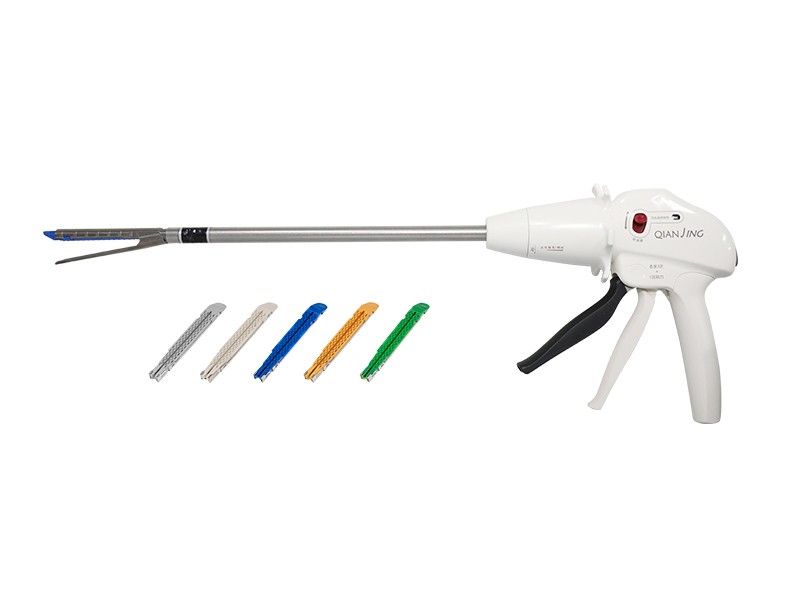
Minimally invasive surgery has become the global standard across general surgery, gynecology, urology, and bariatric procedures. At the heart of this surgical revolution are the laparoscopic instrument companies that design, manufacture, and distribute the trocars, graspers, dissectors, energy devices, and visualization systems used in operating rooms worldwide. In 2026, the global laparoscopic devices market is estimated at over US$15.28 billion and is expected to grow steadily through 2036, driven by rising surgical volumes in Asia-Pacific, expanding ambulatory surgical center capacity in North America, and continuous innovation in both disposable and robotic-assisted platforms.
For hospital procurement managers, surgical distributors, and group purchasing organizations, choosing the right laparoscopic instrument manufacturer is no longer just a matter of price—it is a strategic decision that affects clinical outcomes, supply chain stability, and long-term operational costs. This article introduces what defines a laparoscopic instrument company, the qualities that separate the best manufacturers from the rest, and the top 5 laparoscopic instrument companies to watch in 2026.
What Is a Laparoscopic Instrument, and What Makes a Great Laparoscopic Instrument Manufacturer?
A laparoscopic instrument is a specialized surgical tool designed to be inserted through small incisions to enable minimally invasive procedures inside the abdomen or pelvis. These instruments include trocars and access ports, graspers, scissors, dissectors, clip appliers, suction-irrigation devices, monopolar and bipolar energy instruments, and laparoscopes. Each must meet exacting standards of precision, insulation integrity, ergonomics, and sterilization compatibility.
A truly reliable laparoscopic instrument manufacturer must meet several critical criteria:
- Regulatory compliance: Possession of ISO 13485, CE marking (under MDR), and FDA clearance or registration, demonstrating adherence to international quality management systems.
- Broad product portfolio: Ability to supply both reusable and single-use instruments across 5 mm and 10 mm standards, as well as 3.5 mm mini instruments for pediatric applications.
- Manufacturing expertise: In-house R&D, vertically integrated production, and rigorous quality control across different production batches to ensure consistency.
- Customization and service flexibility: OEM/ODM capability, private labeling, varied shaft lengths, and responsive technical support with clear communication channels.
- Clinical partnership: Collaboration with surgeons to refine ergonomics, jaw patterns, and energy delivery for improved patient outcomes.
- Global distribution and support: The ability to serve hospitals and ASCs across multiple regions with reliable lead times and warranty coverage.
When a laparoscopic instrument company excels in all of these dimensions, it becomes a long-term strategic partner rather than a mere vendor.
Top 5 Laparoscopic Instrument Companies in 2026
Below are five of the most influential laparoscopic instrument companies in 2026, selected based on global market presence, product breadth, and manufacturing leadership.
1. Medtronic plc
Company Profile: Headquartered in Dublin, Ireland, Medtronic is a global leader in medical technology with a comprehensive surgical portfolio built partly on its Covidien legacy. It is consistently ranked among the top participants in the disposable laparoscopic instruments market.
Advantages: Medtronic combines its LigaSure energy platform, visualization systems, and the Hugo robotic-assisted surgery (RAS) system to deliver integrated laparoscopic solutions. Its global scale and continuous innovation in articulating instruments and multi-channel access platforms make it a preferred laparoscopic instrument manufacturer for large hospital networks.
Main Products:
- LigaSure energy devices for vessel sealing
- Trocars and access devices
- Disposable laparoscopic instruments
- Hugo RAS robotic-assisted surgery platform
2. Johnson & Johnson (Ethicon)
Company Profile: Based in New Brunswick, New Jersey, USA, Ethicon is the surgical division of Johnson & Johnson and a dominant force in minimally invasive surgery worldwide.
Advantages: Ethicon's strength lies in its ability to integrate laparoscopic instruments within a broader digital surgery ecosystem. In 2026, it received CE Mark for the ETHICON 4000 Stapler, designed for reliable staple line integrity across tissue thicknesses. Its global distribution, surgeon education programs, and regulatory expertise reinforce its leadership.
Main Products:
- HARMONIC ultrasonic energy devices
- Endoscopic staplers (ETHICON 4000)
- SILS Port single-incision laparoscopic platform
- Advanced visualization and access systems
Contact us
3. Qianjing
Company Profile: Qianjing is a specialized laparoscopic instrument manufacturer with deep expertise in surgical and rehabilitation device manufacturing. As a trusted supplier in the global medical device industry, Qianjing serves healthcare institutions seeking high-quality, cost-effective laparoscopic instruments backed by strong engineering capability.
Advantages: Qianjing stands out as a laparoscopic instrument company for its commitment to precision manufacturing, quality management, and customer-centric service. The company's manufacturing philosophy emphasizes strict quality control, responsiveness to customer inquiries, and flexibility in accommodating custom orders. For overseas distributors and hospital procurement teams, Qianjing offers a compelling combination of competitive pricing, production scalability, and partnership-oriented support—making it an ideal laparoscopic instrument manufacturer for facilities that require both quality and value.
Main Products:
- Disposable laparoscopic trocars (bladeless, optical, single-port)
- Reusable and disposable graspers, scissors, and dissectors
- Monopolar and bipolar laparoscopic instruments
- Ligation clip appliers and suction-irrigation systems
- Specimen retrieval bags and access devices
Contact us
4. B. Braun Melsungen AG (Aesculap)
Company Profile: Based in Melsungen, Germany, B. Braun's Aesculap division is a major global participant in the laparoscopic instruments market, with a strong emphasis on both reusable and single-use solutions.
Advantages: Aesculap laparoscopic instruments are designed hand-in-hand with clinical partners, combining superior craftsmanship with modern design. Its modular instrument design allows full disassembly for effective cleaning and decontamination, with all modular instruments validated for sterilization while fully assembled—ready for the operating room immediately. With more than 100 jaw patterns of reusable scissors, graspers, and dissectors, Aesculap is a leading choice for minimally invasive surgery around the globe.
Main Products:
- Reusable and reposable laparoscopic instruments
- AdTec single-use monopolar and bipolar instruments
- Laparoscopic slide-lock graspers and axial needle holders
- SQ.line clip appliers
- Trocars, endoscopes, and advanced energy solutions
- Modular monopolar electrodes and storage systems
Contact us
5. Olympus Corporation
Company Profile: Headquartered in Tokyo, Japan, Olympus is a global leader in endoscopy and laparoscopic imaging systems, with a key role in the visualization aspect of minimally invasive surgery.
Advantages: Olympus specializes in high-definition laparoscopic imaging systems and endoscopes that enable precise visualization and procedural efficiency. Its next-generation surgical imaging platforms and energy devices for hemostatic cutting and vessel sealing position it as a technology leader. Olympus continues to launch new surgical energy devices, making it indispensable to any modern laparoscopic instrument company shortlist.
Main Products:
- High-definition laparoscopes and telescopic systems
- Surgical energy devices for vessel sealing
- Endoscopy and visualization platforms
- Integrated laparoscopic imaging solutions
Contact us
Key Considerations When Choosing a Laparoscopic Instrument Company
Selecting the right laparoscopic instrument manufacturer requires a systematic evaluation. Based on industry best practices, consider the following:
- Verify certifications across production batches: Request ISO 13485, CE (MDR), and FDA documentation. Ask for samples from multiple production batches—not just showcase units—to verify consistency in manufacturing quality.
- Evaluate product quality and ergonomics: Look for smooth jaw operation, precise blade alignment, 360-degree rotation, and extended insulation in monopolar instruments to prevent stray electrical currents.
- Assess customization and MOQ flexibility: Determine whether the laparoscopic instrument company can accommodate custom blade configurations, shaft length variations, private labeling, and reasonable minimum order quantities.
- Analyze total cost of ownership: Unit price is only one factor. Consider product longevity, warranty coverage, reorder efficiency, and shipping costs. Beware of pricing that seems too good to be true, as corner-cutting on QC or compliance creates hidden costs.
- Test responsiveness and support: Manufacturers who respond to inquiries within 48 hours and provide detailed product information demonstrate customer-focused operations. Schedule facility tours when possible to observe manufacturing operations firsthand.
- Review warranty and service terms in writing: A standard 2-year warranty against manufacturing defects is becoming a benchmark in the industry—confirm terms before committing.
Conclusion
The landscape of laparoscopic instrument companies in 2026 is shaped by global giants like Medtronic, Ethicon, and Olympus, strengthened by German engineering excellence from B. Braun Aesculap, and energized by agile, quality-driven manufacturers such as Qianjing. Each laparoscopic instrument manufacturer brings distinct strengths—whether it is scale, innovation, craftsmanship, or cost-effectiveness.
For healthcare providers and distributors, the winning strategy is not to chase the lowest price, but to build long-term partnerships with laparoscopic instrument companies that demonstrate regulatory compliance, manufacturing consistency, clinical collaboration, and responsive service. By applying the evaluation framework outlined in this article, procurement teams can confidently select a laparoscopic instrument manufacturer that enhances surgical outcomes, improves operational efficiency, and delivers lasting value in an increasingly competitive global market.